Marknad
Two Sides: Changing tides in the book industry
Physical books are driving the growth.
Läs mer →
 Nätverket för alla inom grafisk kommunikation, produktmedia och förpackningar.
Study shows the strength of door drops for retailers.
Written by Lasse Krogell, NOPA
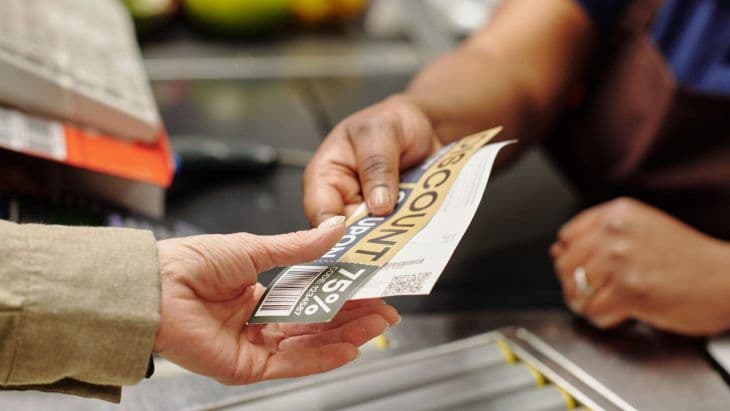
I came over a scientific study in the Netherlands that examined how a regional, temporary ban on printed flyers affected Lidl’s business. In the Utrecht area Lidl stopped distributing their weekly leaflet for about one year. A group of scientists have published a very detailed study on the consequences of consumer shopping behaviour. You can download the free study from here .
The results of the study show that the stop in distribution of the flyer had a clear impact on shopping behaviour. The number of weekly shopping visits to Lidl decreased by 2.5 %, and the total weekly spending declined by 8.7 %. The study also shows that it was not only the promotional items that were affected, but also non promotional items.
Furthermore, the study concluded that the cost savings did not compensate for the loss in sales
The strongest effects were from households where Lidl is not their primary shopping destination. On regular Lidl customers the effect was clearly smaller. This clearly shows that direct mail serves as a reminder activating occasional shoppers.
In the study they also analysed the effects on competitors’ sales. They found out that there was no significant change in the competitors’ sales during the period when the Lidl leaflet was not distributed. But an exception was another discount retailer that benefited.
During the discontinued period Lidl tried to promote digital alternatives to their leaflet. These digital alternatives could not compensate for the drop.
In the report they have also listed several retailers globally that have first decided to discontinue the printing and distribution of their promotional leaflets, but have in one year decided to restart the publishing.
Many years ago, the Finnish Printing Federation financed a study where three retailers and one pizza chain opened their data to scientists. The study analysed marketing investments in different channels by the participating companies and the effects on sales of the different marketing activities. Also, this study showed that the money spent on print promotions gave the best return.
But it is very challenging for the print salesperson to get today’s marketing decision makers to listen to these results, and even make a smaller test campaign to see how a print promotion gives results.
During the recent weeks there has been a vivid discussion in the media on how dependent we all are on huge US tech companies. Most of the digital marketing campaigns are run on American platforms. A lot of the ad money goes to these giants. Using good old print is not fully independent of US tech giants, but to a much smaller degree than the digital advertising.
Physical books are driving the growth.
New Report on Reading Habits: Printed Books Dominate, but Lack of Time Keeps Swedes from Reading More, Two Sides reports. According to Branschkoll.se, a new report reveals that while printed books remain the most popular format, over half of Swedes cite lack of time as the main reason they don’t read more.
Some time ago I read an article written by Mårten Mickos, a Finnish executive living today in Silicon Valley. The article inspired me to write today’s post.