Teknologi
New non-profit organization to encourage children to read books
6,500 books to eleven schools.
Läs mer →
 Nätverket för alla inom grafisk kommunikation, produktmedia och förpackningar.
“The timing is perfect for this investment.”
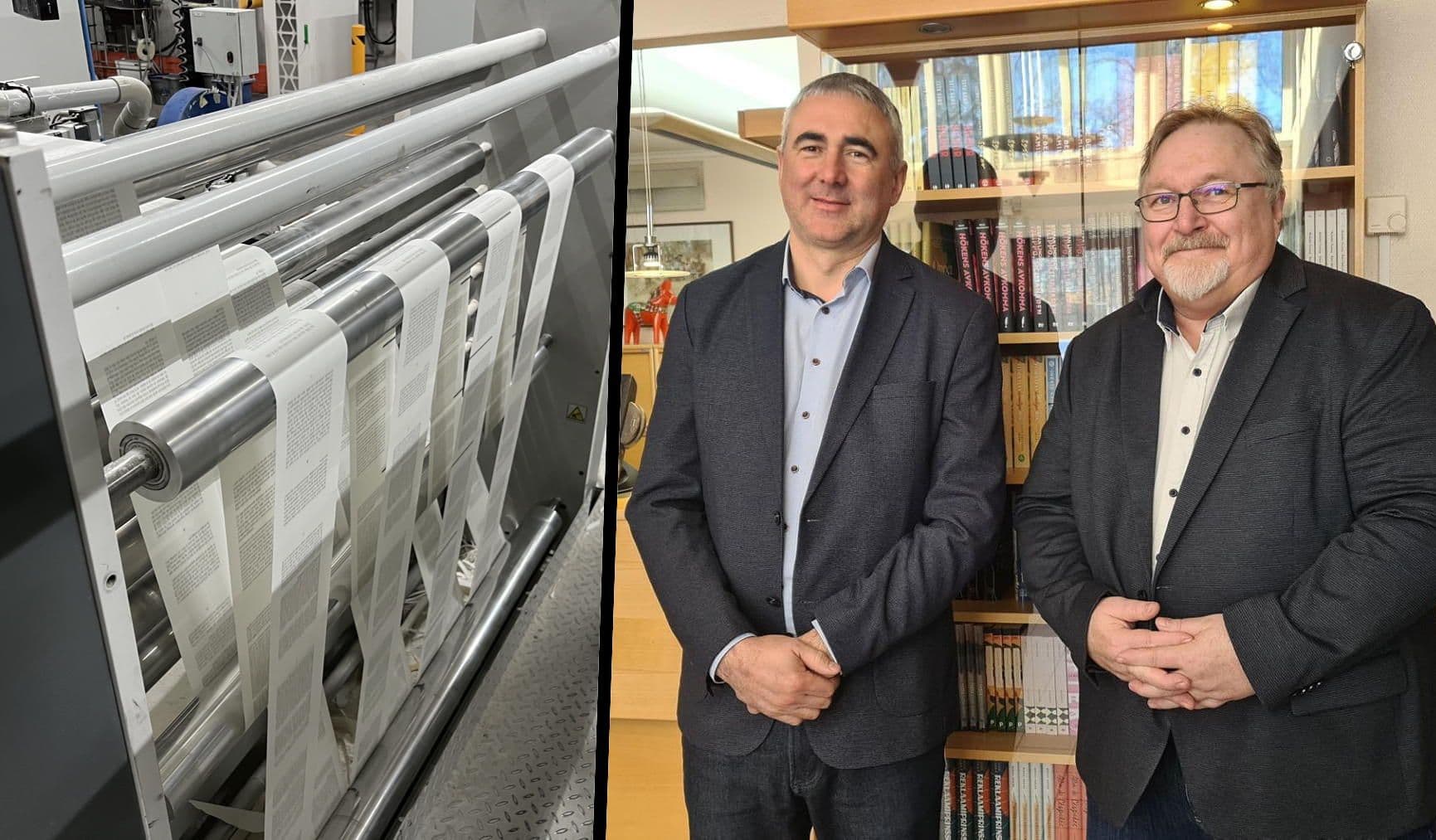
Scandinavian book printer Scandbook is in the midst of a massive investment of 36 million SEK – installing new digital printing technology in both Falun and Klaipėda.
“The timing is perfect for this investment as our customers are increasingly looking at sustainability issues and, of course, their costs,” says Paulius Juška, CEO of Scandbook.
The total investment amounts to 36 million kronor.
In Falun, the transition from offset to inkjet printing began in 2014 when they decided to invest in a Timson press with inkjet technology from Kodak.
Over a couple of years, offset printing was phased out from the facility in Falun, while it was developed in Klaipėda, Lithuania, where until now, they have only produced books in offset. But even that is now changing. The investment means a significant upgrade of the press in Falun while installing a new digital printing line in Klaipėda.
“It has been a long learning curve for us, which has cost both money and many late nights, but now we have the right expertise to carry out our new investments,” says Paulius Juška.
Alf Linder, site manager in Falun and the one who has driven digitalization at Scandbook, adds:
“Now it’s time to reap the fruits of the investment in digital printing that we were so early with,” says Alf.
The press from Timson, purchased in 2014, remains the foundation when they now install entirely new print heads from Fujifilm.
“The Kodak system is no longer supported, so we had to do something,” says Alf Linder.
The choice fell on Fujifilm and their Samba technology. One of the advantages is that it is a stable technology that makes it, among other things, more predictable at start and stop. “Uptime” will be much higher than before, Scandbook believes.
“This gives us much better control over the process, and we will be able to print on many more different papers. Just having a wider selection of papers is very important right now. The market wants to be standardized, but it also wants to be flexible, as paper is such a large part of the cost of the book,” says Alf Linder.
After the upgrade, they can print on a wider range of book papers, even thinner papers. This creates opportunities for publishers to navigate the increasingly uncertain market for printing paper and its costs.
“It’s about winning from two sides. Partly guaranteed quality, deliveries, and flexibility for the customers, and on the other hand, it’s good for our company which becomes much more stable, this will be our opportunity to create a good future,” says Paulius Juška.
Scandbook’s early investment in digital printing has resulted in them having unique technology compared to competitors. The wide paper web of 1.3 meters is hard to buy today and is a legacy from the supplier Timson (which no longer exists). If you want a similar press for book printing, you have to custom-build it yourself.
“We can produce twice as many books as other alternatives, and that makes us very strong on print runs between one thousand and three thousand copies,” says Paulius.
In Klaipėda, they have focused on offset printing for many years, but now that is changing. As book print runs decrease, they find themselves in a situation where they must print these in a technology (offset) that is designed for larger jobs.
“When large machines do small runs like 500 or 100 copies, it’s not right,” says Paulius Juška.
Now a new press from Screen and post-processing from Hunkeler is being installed.
“The inkjet press from Screen has a web width of 52 cm with high speed; right now, we run production at 150 meters per minute.”
The equipment from Hunkeler that makes the book blocks can be run both inline or offline, which creates great flexibility.
“We also have new software, Equios from Screen, which is designed to optimize book production. Having digital printing at both facilities is logical since it provides a digital backup while the important Finnish market can receive deliveries directly from Klaipėda. The logistics to the different markets are important when deciding to invest in the various facilities.”
At the same time, work on sustainability has advanced rapidly in Sweden, and with that, Scandbook is aiming to take more and more market shares across Europe.
“For example, against the German market, we now have all the parameters in place to succeed, the right price, fast deliveries, and good sustainability work.”
Scandbook has been working on sustainability projects for a long time and is today certified, among other things, by having their emission reductions approved by SBTi and their sustainability work audited by Ecovadis. Three years ago, there was little interest among publishers in sustainability issues, but it looks completely different today, and Scandbook has the important and strong certificates to help customers comply with new regulations being introduced.
“Today, sustainability work is no longer voluntary – we are a stable partner in this respect, it is part of the game and is a market requirement,” concludes Alf.
Scandbook has 50 employees in Falun and 150 in Klaipėda. Every year, they print 40 million books delivered to 13 different countries.
6,500 books to eleven schools.
Commentary written by Lasse Krogell, Nopa: Almost every day you find news about AI and how it will change a lot of things both in your private life and in businesses.
It is only two weeks to the NOPA annual meeting and seminar in Frankfurt.